
 on 15th February 2026
By Mariana Cevallos
The beginning of Apuleius’ Metamorphoses presents the reader with an interesting word, with a meaning broad enough to question the content and intention of the whole text: permulcere.
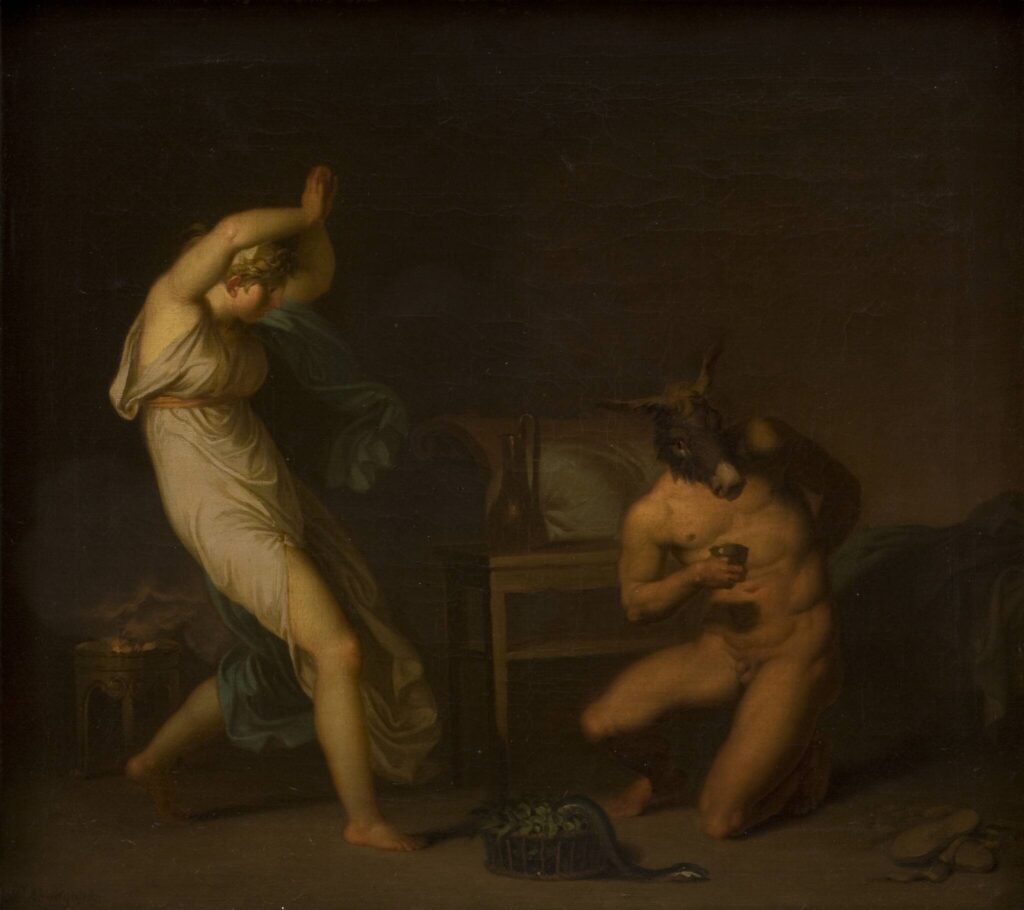
Usually translated as to calm, pacify, appease; it can also mean to enchant magically (Schlam 1992) or to totally beguile. The idea rests on the connection between speech and magic, the charming capacity of words and stories to seduce the listener and reader, the base of Roman oratory, and the heritage of Greek song and performance.
The significance of this term is also connected with notions of death and deep sleep, something that for ancient civilisations was widely explored as a source of danger but also of magical perceptions.
With this profound term in the prologue, Apuleius invites us to think of this text as something belonging to the world of dreams and mysticism, to a position where the question of who is the main narrator could arise, putting the reader into the role of initiate and protagonist at the same time of listener.
In this way, Apuleius transforms the collection of intertwined stories here into something close to a dream journey where the reader enters and exits different ritual and magical passages and situations to end with a protagonist devoted to the cult of gods.
Ancient novels have a prevalence of dreams and ritual-magical contents as main axes, something that can be read implicitly already in ancient Greek epic, and the relevance of dreams, sleep, and omens.
But Apuleius and the intention of permulcere seems to be a tool to attach the reader with the author and the protagonist, taking the three of them to the position of protagonist where the multiple meanings and cult significance are incorporated and the value of the story does not lie only in the magical metamorphosis as such, but in the presence of gods and cosmic forces, the magical and religious elements that speak of an ancient past and of the mystical and private presence of beliefs and traditions.
This place of magic and enchantment, like the central story, is inherited from Greek tradition. In ancient Greek novels, the presence of illusions and dreams is also highly relevant, and the content evokes the Platonic discussions of the opposition between mind and soul, the need to seek the transcendence of the soul and mind over the physical, especially in the tale of Psyche and Cupid.
Apuleius is indebted to Plato and the Greek novel, especially to the lost fiction with the same plot as his own, also called Metamorphoses, written by Lucius of Patrae, but Apuleius’s book is at the same time a captivating fusion of this with the folklore of Roman traditions and the mythological background that leads the entire plot to a mysterious ending, with obscure and distinct religious traditions, the mysteries of Isis that collide with Greek and Roman influences and syncretism.
Permulcere resonates again, connecting all this mystical content with the idea of enchanting and seducing the listener. And once again, it is possible to think of the Greek heritage, the muse and the power of the bard’s tongue that, if we recall Hesiod’ Theogony, charms the listener by telling lies that seem like truths, or the power of poetry as a remedy to heal sorrows in Homeric poetry.
Apuleius also manifests this power of the text when he says, “At ego tibi (…) uarias fabulas conseram auresque tuas beniuolas lepido susurro permulceam” [I want to weave for you (…) a series of different stories and caress your benevolent ear with a pleasant murmur].
The whole text is an echo of the significance and the main role of orality for antiquity, the literary tradition that was passed from generation to generation in the form of songs, lullabies, stories around the table, the symposium, and the fire.
The community reunited around a single song, and Apuleius gives us this in the various and different plots and stories that surround the reader and the main character, remembering this balance of communal fabric of histories and literature, the magical component of oral tradition, and the conjugation of art and religion, the realm of mortals and the divine.
Image above: Fotis sees her Lover Lucius Transformed into an Ass, by Nicolai Abildgaard, 1808.
©️ Mariana Cevallos