
 on 4th December 2025
The “noble-hearted woman whose courage knew no bounds”, Polyxena was the youngest daughter of Priam and Hecuba. Unlike many of her family members, she is not mentioned in the works of Homer, but is mentioned in the now fragmentary epic the Cypria.
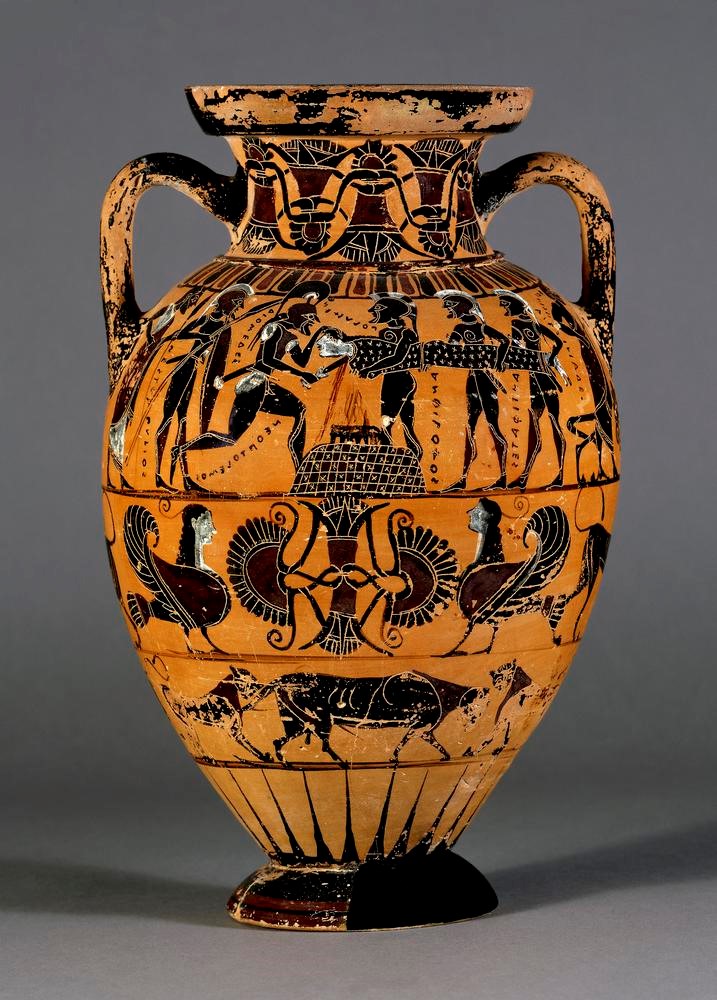
She is mostly know for the stories around her death, though as is standard with myth, there is not only one version of this. In the Cypria, it is told that she is wounded by Diomedes and Odysseus at the fall of Troy. However, the more well known version of her death is told in the Iliou persis (another lost epic) and then retold famously by Euripides in the Trojan Women. In this version, she is sacrificed on the grave of Achilles by his son, Neoptolemus.
Something interesting in some versions of this story, is that the ghost of Achilles had stilled the winds, preventing the Greeks from retuning home. He demands the sacrifice of Polyxena as part of his share of the spoils of war, before he will allow the Greeks to leave.
This mirrors the sacrifice of Iphigeneia, for favourable winds, right at the start of the war, bookending the decade of bloodshed with the slaughter of two innocent women.
Polyxena faces her sacrifice with bravery. In Trojan Women she implores her mother to allow her sacrifice, and laments that while those unaccustomed to calamity may endure it, but they do so with grief. She states “It is a great ordeal to live without honour”. As she stands atop Achilles’ burial mound, she is held by the men immediately prior to her death. She tells them that she dies willingly, tells them to take their hands off her, and declares that she has lived as a princess, and will not die now as a slave.
Image: Black figure amphora in the British museum (1897,0727.2) showing the sacrifice of Polyxena.
©️ Zoe Lister